By Stephen Hudson. Last Updated 17th November 2025. If you have been injured by dangerous machinery at work, you may be able to make a claim if the accident was caused by your employer’s negligence.
Employers have a clear duty of care under the Health and Safety at Work etc. Act 1974 to maintain all workplace machinery, provide effective safety guards, carry out regular inspections and ensure that staff receive proper training. When these responsibilities are neglected, serious accidents can occur.
Even if you were partly at fault, you could still have grounds to claim compensation. A successful dangerous machinery claim can help you recover financial losses, such as lost income and treatment costs, as well as non-financial damages, including pain, suffering and loss of quality of life.
Legal Expert has helped many workers secure compensation after avoidable machinery accidents. If you have questions or would like tailored guidance, our friendly advisers can offer free legal advice today. You can contact us using the button below.
4.8 (466 reviews)
We're No Win No Fee Solicitors Trusted by thousands to win compensation.
If you’d like to learn more first, this guide explains how dangerous machinery at work injury claims work, the evidence you will need and how the claims process unfolds. It also outlines your rights, the time limits that apply and how a No Win No Fee agreement could help you pursue compensation with reduced financial risk.
Claiming For An Injury Caused By Dangerous Vehicles At Work
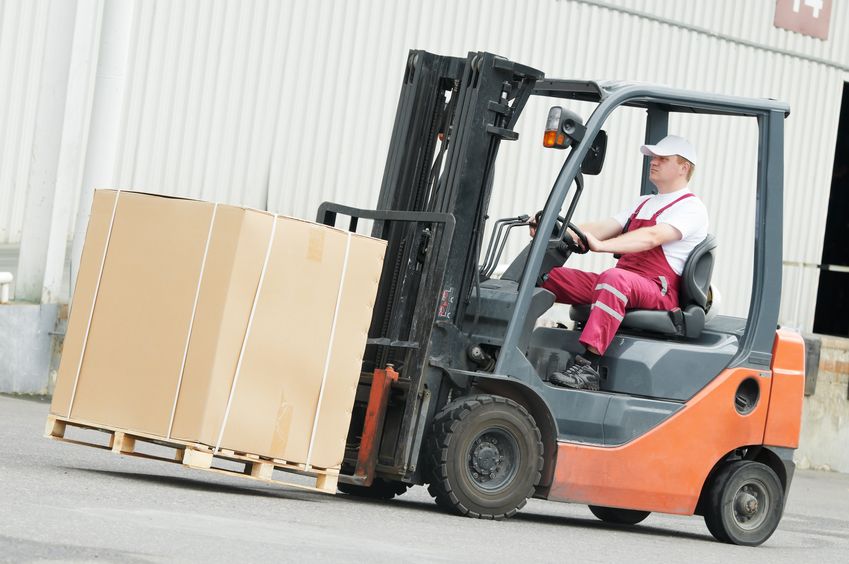
Hundreds of people are killed or critically wounded every year due to accidents involving dangerous vehicles and moving equipment at work. Dangerous vehicles at work in this context can refer to any moving equipment, including cranes, forklifts, bulldozers and motor vehicles. It can also refer to accidents involving vehicles and equipment on the work premises, such as in the car park or near a road. There will be health and safety guidelines that dictate how the employer should handle such situations.
Due to this equipment’s volatile nature, the law requires that employees who operate this equipment are kept safe. Employers are expected to ensure that their workers are properly trained on using dangerous vehicles at work and giving them proper instructions and adequate monitoring during work. A failure to do this may mean that the employer has acted in a negligent manner and is liable for any accidents that may occur.
Furthermore, a work equipment risk assessment is required to be performed by your employer. This is so that any hazards can be identified and removed or reduced.
Dangerous Machinery At Work Injury Claims Involving Faulty Equipment
The use of faulty or defective equipment at work can lead to accidents and injuries. Electric equipment which is not fitted with proper insulation, for instance, can cause electrical shocks, electrocution or burns, while poorly maintained equipment may cause accidents due to worn-out or faulty parts. Faulty equipment in the workplace can include:
Broken equipment.
Equipment with missing, faulty or disabled parts.
Equipment that has undergone temporary repairs and still failed to prevent the accident from happening.
Equipment with slow or malfunctioning switches.
According to the Provision and Use of Work Equipment Regulations 1998 (PUWER), workplace equipment needs to be safe for use and properly maintained. The equipment also needs to be correctly installed and accompanied by the necessary and appropriate protective control measures to avoid machinery/equipment accidents.
PUWER also requires that employers get rid of equipment or parts of equipment that may increase hazard risks relating to plant and equipment use. Your employer following these regulations should result in them removing any unsafe machinery in the workplace.
Another useful piece of legislation is the Employer’s Liability (Defective Equipment) Act 1969. This provides protection to employees injured during the course of their employment as a result of a defect in equipment.
If you’ve been injured by dangerous machinery at work and believe your employer should have repaired or removed the equipment, get in touch with us for free legal advice.
Other Common Causes of Dangerous Machinery Accidents at Work
Apart from using faulty or poorly maintained equipment, dangerous machinery accidents can still be caused by a number of other reasons. Accidents can include (but are not limited to):
Contact Accidents: This can happen when you come in contact with sharp or dangerous objects due to your employees’ failure to provide the right safety protection.
Ejector Accidents: Accidents caused by flying objects which could hit you and cause you to sustain serious injuries.
Entrapment Accidents: Getting your clothing or parts of your body (such as your fingers, hair or legs) caught in the moving part of a machine.
Impact Accidents: Getting hit by moving equipment and sustaining injuries as a result.
Some machines should have safety guards to protect from these incidents above, such as covers over blades or screens to prevent chippings from flying back at you. However, such safety features can become damaged over time, and if not properly maintained, can lead to the risk of injury.
Compensation Payouts In Machinery Accident Claims
Compensation for successful dangerous machinery at work injury claims can include general and special damages. General damages are included to compensate you for the pain and suffering your injuries have caused.
Those who value general damages for a work accident claim may consult the Judicial College Guidelines (JCG). This publication includes compensation brackets for many different injuries. The table below includes some of the compensation amounts listed in the JCG for different injuries that could occur due to dangerous machinery at work. Take note that the first entry is not taken from the JCG.
Injury
Severity
Amount
Multiple Severe Injuries And Special Damages
Severe
Up to £1,000,000+
Brain Damage
Very Severe
£344,150 to £493,000
Moderate (i)
£183,190 to £267,340
Back Injury
Severe (i)
£111,150 to £196,450
Moderate (i)
£33,880 to £47,320
Neck Injury
Severe (ii)
£80,240 to £159,770
Chest Injury
(b) Traumatic Injury To Chest, Lung(s) And/Or Heart
£80,240 to £122,850
Knee Injury
Severe (i)
£85,100 to £117,410
Ankle Injury
Severe
£38,210 to £61,090
Shoulder Injury
Severe
£23,430 to £58,610
Your work accident compensation may also include special damages, which can cover the financial losses that your accident and injuries have caused.
For instance, if you’ve needed to take an extended period of leave from work, there may be a loss of earnings you could recoup as special damages. Other related expenses, such as the cost of prescriptions or mobility aids aiding your recovery, may also be covered under special damages.
To claim special damages, you’ll need to provide certain documents as evidence, such as bank statements and wage slips. Get in touch with our advisors today if you would like to learn more about how much your work accident claim may be worth.
Assessing Injuries In Dangerous Machinery At Work Claims
The type, extent and severity of the injury sustained will be put into consideration by the court when trying to decide on a suitable amount to be awarded as compensation.
Injuries sustained from dangerous machinery while at work can be classified as severe, moderately severe or minor.
Severe injuries include death, fractured bones, amputation, loss of limbs, crush injuries or any other injuries that cannot be completely healed or reversed.
Moderately severe injuries are equally serious but could be significantly reversed with the right treatment and rehabilitation. They include burn injuries, hearing loss, vision loss, brain damage, mental health problems or musculoskeletal disorders.
Bruises, cuts, scratches, swelling, grazes, eye injuries, and sprains are examples of minor injuries.
As a general rule, the more severe the injury sustained, the higher the compensation amount that would likely be awarded. Read on to learn more about how you could be affected by serious injuries caused by unsafe machinery.
What To Do If You Have Suffered An Injury Caused By Machinery at Work
When you are considering claiming, one of the most important components of any case is evidence. To claim compensation, you have to prove that your employer was negligent and directly or indirectly responsible for your accident. It is imperative that you take the following steps following a dangerous machinery accident at work, as it can help you gather enough evidence to back up your claim.
Record the Event: It helps to get photo and video evidence of the accident with a time stamp on it. This should be done as soon as possible after the accident. You should take photos of the equipment that caused the accident, the environment within which the accident occurred, and the injuries you sustained from the accident.
Get Names and Testimony of Witnesses: Make sure you record the names of those employees or other people who witnessed the accident.
Make a Formal Report: Formally report the accident to your employer and record your report.
Keep Receipts and Evidence of Treatment: Don’t forget to keep records of all financial expenses made for the treatment and rehabilitation costs.
Document all Other Losses: If you lost your job or suffered any other tangible or intangible losses due to the accidents, you should keep records of that too.
Get Expert Evidence: Obtain a medical assessment of the type, severity and implications of your injury. You can get this from your doctor. We can also help you arrange for a local medical professional to evaluate you.
Talk to a Solicitor: After gathering all the necessary evidence and documents required to prove your case, you should talk to a solicitor. A solicitor will be able to carry out a professional review of your case and provide the necessary legal advice and support needed to make your claim.
What Is The Accident At Work Time Limit?
It is important to understand that there is a three-year time limit for making claims, and this starts from the day of the accident (or the day you receive a diagnosis). This is why we recommend speaking to a legal professional as soon as possible.
The rules regarding the time limit for starting a personal injury claim are set out in the Limitation Act 1980. The time limit can work differently to normal under certain circumstances. If, for instance, the victim is below the age of 18, then the time limit for claiming will be frozen until the day of the victim’s 18th birthday. It will also be frozen if the victim lacks the mental capacity to make decisions on their own behalf.
In either circumstance, the victim will be unable to start a claim on their own, but it may be possible for a claim to be started on the victim’s behalf by a representative known as a litigation friend. The litigation friend could be someone close to the victim, such as a parent, guardian or friend.
How Much Time Does It Take To Settle Dangerous Machinery Claims?
There is no set time limit for how long it takes to settle dangerous machinery claims. This period can be impacted by certain factors, such as:
The nature and complexity of your injuries.
Whether your employer accepts or denies liability for your injuries.
The strength of your evidence: If you already have strong evidence, you won’t have to devote more time to collecting proof.
Negotiations for your compensation amount.
Whether your claim goes to court.
An experienced workplace injury solicitor would be able to provide you with a rough timeline for your dangerous machinery claim. While it isn’t compulsory to hire a solicitor to claim compensation, we recommend that you delegate the claims process to an expert. If you choose to work with one of our workplace accident solicitors, they could help you in the following:
Collecting evidence.
Assessing the strength of your claim.
Calculating and negotiating your compensation amount.
Communicating with the defending party.
Simplifying complex legal terms.
Making sure you’re aware of the time limit for your claim.
Get in touch with our advisors now for more information about our services. If your claim is found to be eligible, you will be connected to one of our capable solicitors.
No Win No Fee Dangerous Machinery At Work Injury Claims
If you’re eligible to claim for an injury caused by a machine, a Legal Expert solicitor could potentially offer their services on a No Win No Fee basis.
If you enter into a Conditional Fee Agreement, a type of No Win No Fee, with a solicitor, this would confirm how you would pay them for their services. No Win No Fee lawyers don’t charge any up-front fees or ongoing expenditures for their services. Therefore, this can be beneficial if you’re concerned about the financial risk of paying a solicitor without a guarantee of a settlement at the end of the process.
If your claim succeeds, you will pay a success fee, capped under The Conditional Fee Agreements Order 2013, to your solicitor. You won’t pay any solicitor fees if they are unable to help you claim compensation.
Our solicitors can work under this type of agreement and may be able to help you. Get in touch at any time for free legal advice and to check your eligibility for us to work with you.
Call for Free Advice and to Start a Claim
Don’t lose out on your opportunity to get compensation. A quick chat with a personal injury solicitor from our team will get you up to speed on your rights and the prospects of successfully pursuing an accident at work claim.
Our advisers are always available to chat so if you need to ask a few questions or want to start a claim today, please call us on 0800 073 8804.
You can also use our contact form by clicking here or using our live chatbox in the right corner.
More Guides On Dangerous Machinery at Work
Below, you can find some more guides and resources on claiming compensation for a machinery accident:
HSE FAQ On PUWER – The Health and Safety Executive has put together a very useful guide on PUWER, which you can read here.
 Skip to content