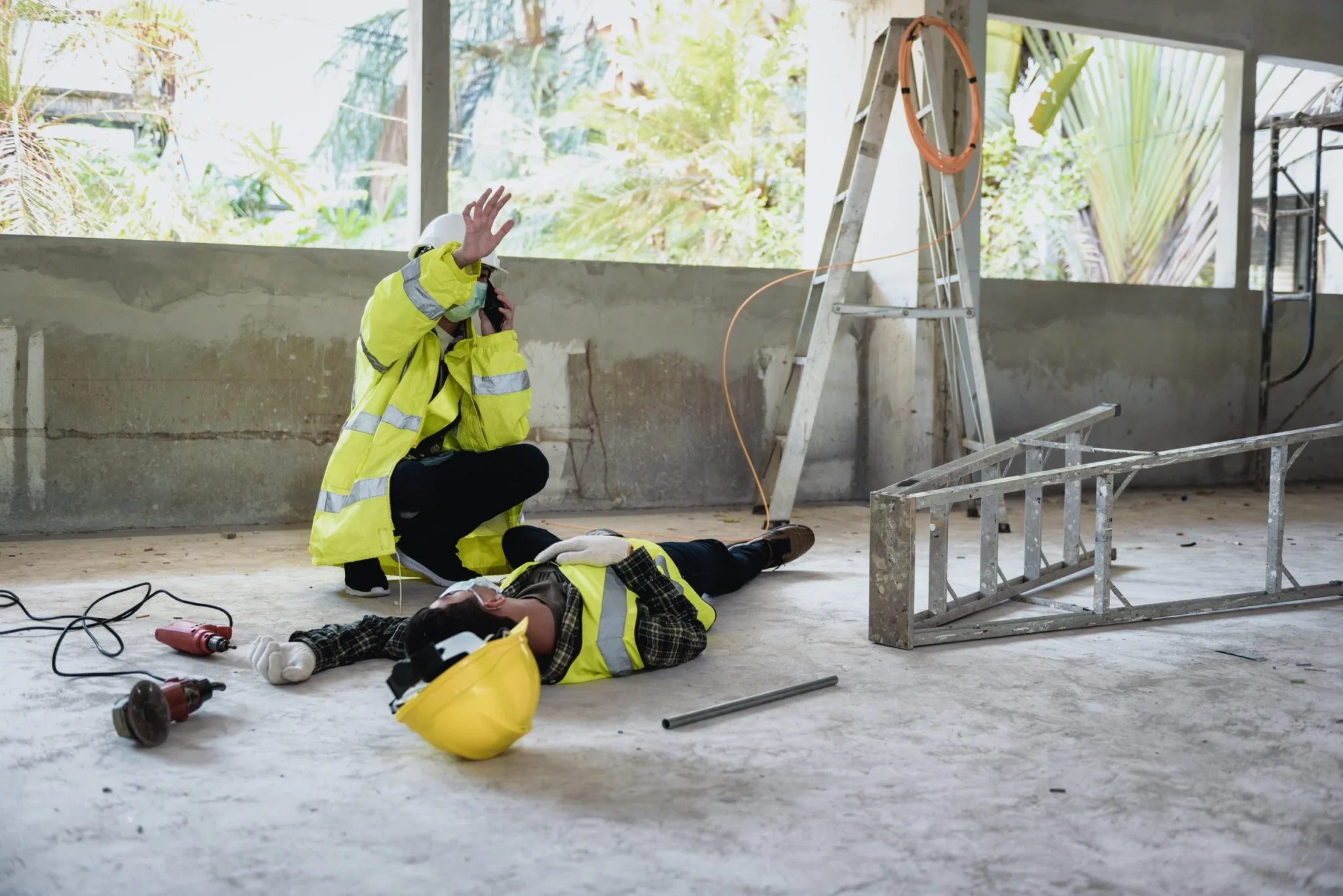
Inadequate training compensation claims are personal injury claims made by employees against employers who failed to provide proper training, leading to workplace injuries. Whether the training you received was inadequate or a complete lack thereof, you could start a compensation claim if you could demonstrate that your employer’s negligence directly led to your injuries. In successful cases, inadequate training compensation can compensate you for physical harm, mental suffering and financial losses arising from your injuries, including lost earnings, medical bills and physiotherapy costs. As such, compensation will be calculated on a case-by-case approach, considering the severity of your injuries, the length of your suffering and the impact on your life and daily activities. By providing strong forms of evidence through witness statements, workplace accident log books and photographs, you could help to strengthen your legal position in holding your employer accountable for your injuries.
At Legal Expert, our team understand that starting a claim against your employer can seem like a daunting prospect. For that reason, our friendly team of advisors are available 24 hours, 7 days a week to help answer your questions, give helpful advice and provide free eligibility assessments. Following this, you could be put through to one of our expert No Win No Fee solicitors to begin your compensation claim. Our solicitors specialise in inadequate training compensation claims and have decades of combined experience in securing successful pay-outs for clients like you.
To discover more about the inadequate training compensation claims process, please feel free to get in touch with our team:
Can I Claim If I Was Injured Due To Inadequate Training?
Yes, you can claim if you were injured due to inadequate training, provided that you can demonstrate that the harm you suffered resulted from the failure of a negligent employer. This means you must be able to satisfy the following requirements:
You Were Owed a Duty of Care
At work, your employer owes you an automatic duty of care to take reasonable steps to ensure your health, well-being and safety as per the Health and Safety at Work etc. Act 1974. As part of this duty, employers should provide information on training, ensure the workplace has the necessary facilities, develop health and safety policies, and ensure staff members are trained for their specific job roles and duties.
That Duty of Care Was Breached
You must be able to demonstrate that your employer breached your duty of care. This happens when they fail to act as a reasonable employer would, such as failing to provide manual handling training, to educate construction workers about health and safety at heights, or to orient staff to complex machines.
You Suffered an Injury
To be eligible, you must have sustained a physical or psychological injury as a result of the breach. Inadequate training can cause a wide variety of injuries, ranging from minor sprains and strains to fractures and life-changing harm, including brain damage and amputations resulting from crushing incidents.
To learn more about your eligibility to claim, please contact our team today.
Can I Still Claim If I Did A Job I Knew I Wasn’t Trained For?
You may still be able to claim if you did a job you knew you were not trained for, provided you were injured as a result of your employer negligently asking you to do it. Employers still have a legal obligation toward your health, safety and wellbeing in the workplace. As such, proper task allocation lies with the employer, and jobs should be assigned that align with your level of training.
However, if it’s found that your actions contributed to the accident, your compensation may be reduced to reflect your share of responsibility. In a split liability claim, this is determined as a percentage. For example, if your level of blame is deemed to be 25%, you would be awarded 75% of the final settlement.
Alternatively, your claim could be impacted by contributory negligence if it’s found that you were partly responsible for your own injuries. Similar to split liability, your compensation will be reduced depending on your level of blame for causing your injuries. For instance, say you were instructed to operate machinery you were not trained on and noticed the equipment had a safety fault, but still carried out the task without informing your employer or requesting appropriate induction. In this scenario, you may be found to have contributed to 20% of the severity of the injuries you sustained in the resulting accident. Therefore, you would receive 80% of your compensation.
To discover more about split liability and contributory negligence, please contact one of our friendly advisors today.
What Are Some Inadequate Workplace Training Injury Examples?
Inadequate workplace training injuries may include arm injuries from improper lifting and crush injuries from a lack of training on complex, dangerous machinery. Please see the following injuries commonly covered by inadequate training compensation claims:
Manual handling injuries, including ruptured discs in your back, debilitating spinal injuries and hernias. These injuries commonly result from a complete lack of training or being taught improper lifting techniques.
Crush injuries, entanglements, lacerations and amputations often result from machinery accidents. Many machines require complex training sessions to operate safely. Without this essential training and appropriate safety briefings, workers can suffer catastrophic, life-changing harm.
Broken bones, serious leg and head injuries from falls from heights. These accidents could arise from a lack of training in working at heights, including scaffolding, roofs, and ladders.
Electric shock injuries and burns frequently occur because of insufficient guidance regarding the use of electrical equipment.
Broken legs, dislocated necks, and foot injuries from slips, trips and falls. These accidents can arise from inadequate housekeeping training or a failure to provide sufficient instruction on the use of personal protective equipment.
Please be aware that the above is non-exhaustive, and injuries from inadequate training can arise in many different situations.
To discuss your own experience with one of our advisors, please don’t hesitate to get in touch with our team.
How Much Compensation Can I Get For Lack Of Training Accidents At Work?
The amount of compensation you can get for a lack of training accident at work will rely on the seriousness of your injuries, the length of your suffering, and the overall impact on your quality of life. Therefore, your compensation will be calculated uniquely.
In successful inadequate training compensation claims, you will be awarded general damages for your physical and mental pain and suffering. General damages are calculated by a solicitor, often by using a combination of medical evidence and a copy of the Judicial College Guidelines (JCG). The JCG contains compensation guidelines for a variety of injuries, making the document valuable to legal professionals.
All entries in the table below, apart from the first figure, have been taken from the JCG. Please be aware that the figures are merely guidelines and do not guarantee how much you could be awarded.
Injury
Severity
Compensation
Multiple severe injuries with financial losses
Very serious - with special damages such as damaged to belongings, lost earnings, and travel costs.
Up to £1,000,000+
Brain Damage
Very severe - the award will be affected by the presence of epilepsy and the ability to communicate with or without assistive technology
£344,150 to £493,000
Brain Damage
Moderately severe - the award will be influenced by the life expectancy and the degree of dependence on others.
£267,340 to £344,150
Brain Damage
Moderate (i) - cases with a personality change and an effect on sight, speech and senses.
£183,190 to £267,340
Above-Knee Amputation of One Leg
(c) - will depend on phantom pain severity and any connected psychological issues.
£127,930 to £167,760
Loss of One Arm
Serious (i) - involving the arm amputated at the shoulder.
Not Less Than £167,380
Back Injuries
Severe (ii) - involving nerve root damage with associated loss of sensation and sexual difficulties.
£90,510 to £107,910
Wrist Injuries
a) - Injuries resulting in complete loss of function in the wrist,
£58,710 to £73,050
Hand Injury
Less serious - cases such as crush injuries resulting in a significantly impaired function.
£17,640 to £35,390
Can Inadequate Training Compensation Claims Cover Special Damages?
Yes, inadequate training compensation claims could cover special damages. If your case is successful, the award of special damages can reimburse you for monetary losses you may have suffered due to your injuries.
Special damages can therefore include the following:
Loss of earnings, encompassing a loss of a promotion, a bonus, overtime pay, and current and future income.
Any personal belongings damaged in the lack of training accident, including clothing, electronics and glasses.
The cost of treatment, whether it be physiotherapy, occupational therapy or counselling, to aid your workplace injuries.
Medical expenses, including private treatment consultations, painkiller prescriptions, and bandage costs.
The cost of professional care or help provided by loved ones. This can include help with daily tasks such as cooking, cleaning, nursing and dressing.
Home modifications, including easy-grip handles, new doors for wheelchairs, ramps and stairlifts if your injuries are of a permanent nature,
Travel costs related to public transport, fuel, taxi fares, and parking fees for medical appointments.
Please also be aware that special damages must be supported with evidence. Our solicitors help claimants with gathering this documentation, which typically includes payslips, invoices, and bank statements.
To learn more about special damages, please contact one of our friendly advisors today.
4.8 (466 reviews)
We're No Win No Fee Solicitors Trusted by thousands to win compensation.
What Will I Need To Claim For Injuries Caused By Inadequate Training?
When claiming for injuries resulting from inadequate training, you will need to document how your employer failed to meet their legal obligations, detail what happened, and seek legal advice to strengthen your legal position. The following steps outline some of the most effective ways to build a robust workplace accident claim:
Seek Immediate Treatment. Regardless of your injury severity, it’s always best to get checked out at your GP, A&E and an urgent care clinic. Not only will this aid your recovery, but it will also help to create official medical records of the incident and the injuries you sustained.
Collect Evidence Where Possible. When it’s safe to do so, you should obtain a copy of your training records, your workplace accident book, CCTV footage, photographs and contact details of anyone who may have witnessed the incident.
Ensure The Accident Is Reported. You should log the accident in your workplace accident book to create an official record of the incident.
Track How Your Injury Affects You. You should start a simple record of your day-to-day pain levels, medical treatment that you’ve received and your financial losses, including lost earnings.
Seek Legal Advice. Obtaining legal advice from a specialist solicitor can ensure that you receive expert advice and that your claim is valued accurately. Most firms offer free consultations, so there’s generally no obligation to start a compensation claim.
Be Aware Of The Time Limit. Your inadequate training at work claim must be started within 3 years of the date of the accident, although certain exceptions may apply.
To learn more about time limits, please get in touch with our advisory team today.
Inadequate Training Compensation Claims With Legal Expert
At Legal Expert, our specialist solicitors take a whole-person approach to supporting clients navigating inadequate training compensation claims. By placing a focus on your health and wellbeing, we will prioritise your recovery and individual needs throughout the claims process.
Please see below for more information about how we deliver expert legal representation to clients nationwide.
Why Claim For Lack Of Training Accidents With Our Solicitors?
You should claim for lack of training accidents with our solicitors due to their expertise in securing successful compensation payouts. By meticulously assessing your evidence, our solicitors can help maximise the compensation that you receive. Please see the further benefits that you could enjoy with our solicitors:
Expertly assist with gathering supportive evidence, including copies of training logs, induction records, and workplace health and safety procedures.
Provide knowledgeable guidance throughout the inadequate training compensation claims process, with clear explanations of legal terms and the legislation your employer may have failed to follow.
Deliver flexible, regular case updates delivered via your preferred communication method, so you’re always aware of the status of your inadequate training compensation claim.
Our
Recommend rehabilitation services familiar with the far-reaching impact of a workplace injury, including physiotherapists and occupational therapists.
Ensure that your compensation is accurately valued, including financial losses such as long-term care, home modifications and lost earnings.
No Win No Fee Claims After Inadequate Training Injuries
Our specialist Win No Fee solicitors offer their expert services under a Conditional Fee Agreement (CFA), providing the following advantages:
No solicitor service fees at the start of your case.
No service fees charged for the duration of the workplace accident claim.
No service fees payable in the event you are not awarded compensation.
If your inadequate training compensation claim is a success, you will pay a success fee to your solicitor. The percentage of the success fee is capped by law and will be subtracted from your compensation. This will be explained before the legal process starts, giving you peace of mind from the outset that the largest share stays with you.
Contact Legal Expert
To discover more about the inadequate training compensation claims process, please contact our team below:
 Skip to content