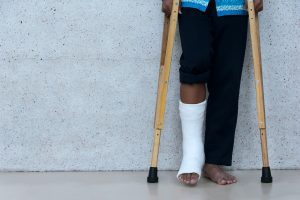
Last Updated 5th March 2026. Injuring your Achilles tendon can make life extremely difficult, as your mobility has likely been limited. Whether you have experienced minor or severe effects, your personal injury may have caused you immense stress.
You may be able to make an Achilles tendon injury claim if your injury was caused by a workplace accident, slip or trip, road accident or other negligence. Compensation can cover pain and suffering, surgery, lost earnings and long-term recovery costs.
If you are hoping to learn more about the process of claiming Achilles tendon injury compensation, why not contact an advisor? They can explain any aspects of the process that you are unsure of and confirm whether you meet the criteria to proceed. You could even be eligible to work with one of our experienced solicitors, who perform legal services that makeclaiming more straightforward for you.
4.8 (466 reviews)
We're No Win No Fee Solicitors Trusted by thousands to win compensation.
Where do Achilles tendon injuries often occur? Many experience such injuries at work, in public or on the road.
What types of Achilles tendon injuries can you claim for? Tendonitis, ruptures and tears are common examples.
How long do I have to make an Achilles tendon rupture compensation claim? Most injured parties need to start their claim within 3 years of the accident. This applies differently when a claimant is unable to make decisions for a claim within this period.
Can I claim for time taken off work? Yes, Achilles tendon injuries can make it difficult or impossible to work, which the compensation can account for.
Can the compensation cover the long-term effects of my injury? Yes, if you can provide medical evidence to prove the severity of your injuries, your compensation may include an award for the long-term impact, such as no longer being able to participate in sports.
Don’t hesitate to contact our team with any queries you can think of.
What Is An Achilles Tendon Injury?
The Achilles tendon connects the calf muscle to the heel. According to the Hull University Teaching Hospitals NHS Trust, it allows you to point your foot downwards, which is important for everyday movements like running and jumping.
Although the Achilles tendon is the largest and strongest in the body, sudden stress can injure it if there is unpredictable movement or a pre-existing weakness. This is common in sports such as football, where players change direction while moving at speed.
Recovery depends on the injury. According to the Cambridge University Hospitals NHS Trust, you may need a protective boot to limit ankle movement for up to 12 weeks after an Achilles tendon rupture. If your injury is serious, it can take 24 weeks of rehabilitation and care or more to restore full function.
You may experience pain and discomfort for long periods, and you may have to take time off work. If someone causes this, you may be able to seek compensation for your losses and discomfort. Contact our advisors via the details above if you wish to discuss Achilles tendon injury claims, or keep reading to learn more.
Can You Claim Compensation For An Achilles Tendon Injury?
You can claim compensation for an achilles tendon injury if you are able to prove that a third party’s negligent actions directly caused you to suffer the injury.
When you’re not used to the personal injury claims process, it can be tricky to know if achilles tendon injury claims meet the necessary eligibility criteria. To be helpful, we have provided the eligibility requirements your achilles tendon injury compensation claim will need to satisfy:
You were owed a duty of care – A person, business or organisation must have owed a duty of care towards you. This translates as a legal responsibility to take reasonable steps to protect your health and safety and prevent achilles tendon injuries. For example, your employer had a duty of care to provide all employees with the correct forklift training.
The duty of care was breached – You must be able to prove thatthis duty of care was breached in some way. This looks like when the party responsible fails to act in a way as a reasonable person or organisation would have done. An illustration of this is, your employer breached their duty of care by asking an employee to use the forklift knowing that they had not been given any prior training.
This breach caused you to suffer harm – In order to have an eligible achilles tendon injury compensation claim, you must have suffered an injury. For example, due to the employee not being given any prior training to use the forklift, the employee loses control of the forklift and crashes into the back of you. You suffer a snapped achilles tendon and a broken leg.
If you believe you are entitled to achilles tendon rupture compensation, why not get the eligibility of your claim assessed for free? Call us today.
Common Causes Of Achilles Tendon Injuries
We will now consider the events that might lead to Achilles tendon injury claims.
In each example, the law places a duty of care on a third party. They fail to meet the standards under that duty and, in doing so, cause harm. Had they met those standards, the harm would have been prevented. In other words, they are negligent.
Accidents At Work
Under the Health and Safety at Work etc. Act 1974, employers must take reasonable steps to keep employees safe in the workplace. This is a duty of care. Negligent employers harm their staff by failing to take these steps. For example:
Due to poor risk assessment, your manager does not put out a “wet floor” sign after cleaning an oil spill, which causes you to slip and fall and sprain your ankle.
A colleague runs over your foot when they lose control of a forklift truck, leaving you with a broken foot and a snapped Achilles tendon. Your colleague was told to operate the forklift despite not having the proper safety training.
After a construction site accident, you require time off work and surgery to fix a broken ankle. You were not provided with adequate Personal Protective Equipment, despite your foreman knowing the risks.
You could make an accident at work claim if an employer harms you by breaching their duty of care.
Road Traffic Accidents
Road users must not endanger one another. This is the duty of care for anyone using the roads. Negligent road users cause harm when they fail to follow the rules of the road, such as the Road Traffic Act 1988 or Highway Code. For example:
Believing it to be safe, a driver mounts the pavement to get around roadworks. They drive over your foot and leave you with a broken ankle and crushed toes.
You perform an emergency brake. You sustain a broken Achilles heel when the driver behind, who did not leave adequate space, rear-ends your vehicle.
An untraced driver knocks you off your motorcycle at night without stopping. Your leg becomes pinned under the bike, causing a broken foot bone in four places, along with an injury to your Achilles heel.
You could make a road traffic accident claim if another road user harms you by breaching their duty of care.
Accidents In A Public Place
Under the Occupiers’ Liability Act 1957, those in control of public spaces must, within reason, ensure the reasonable safety of those visiting the space for its intended purpose. This is a duty of care. Negligent occupiers harm visitors by failing to do so. For example:
The council does not fix uneven pavement in their multi-storey car park despite knowing about the hazard. You trip while leaving work one night and sustain a serious Achilles tendon injury,
You are left with a severely twisted ankle when, during a visit to your local swimming pool, you fall on tiles that had not been cleaned as often as risk assessments revealed they should be.
Your local leisure centre causes a serious gym accident by not removing equipment they know to be faulty. You have to take several months off work with a fractured femur when it collapses on your leg.
You could make a public liability claim if an occupier of a public space harms you by breaching their duty of care.
If you would like to discuss your unique circumstances, our advisors are available 24/7 via the details above. They can help you better understand your prospects and, if you wish to proceed, connect you with one of our personal injury lawyers.
What Is The Difference Between Tendon And Ligament Injuries?
While reading our guide on Achilles tendon injury claims, you may be thinking about ligament injuries as well. This is because both tendons and ligaments are soft tissues, so the terms are often used interchangeably. However, while both tissues are connective, they differ, and we can understand this through the differences in their functions.
Tendons are the connective tissue which attach bones and muscles together to facilitate their movement. Therefore, a tendon injury can impact mobility and dexterity and can cause severe pain when the affected joint is moved. Apart from Achilles tendonitis, which is the subject of this guide, here are some other common kinds of tendon injuries:
Biceps Tendonitis: As the name suggests, this injury affects your biceps and causes pain in the shoulder. This often occurs in sports or due to slips, trips and falls.
Supraspinatus Tendonitis: This is an inflammation of the tendon connecting your shoulder to the arm, affecting the top part of the shoulder joint. It is called shoulder impingement.
On the other hand, ligaments are the connective tissues that join bone to bone, and help to stabilise joints and muscles. Some common examples of ligament injuries include whiplash, which is common in road traffic accidents and sprains.
Speak to our advisors now to determine the eligibility and strengths of your Achilles tendon claim.
How Much Compensation For Achilles Tendon Injury Claims?
Personal injury claims generally seek compensation in two ways:
General damages for pain and suffering.
Special damages for financial losses.
Both must be the result of your injuries. For example, you could claim compensation for a car accident that broke your leg unless your leg was already broken. In that case, you could only claim for the extent to which the crash, according to medical evidence, made your leg worse.
A claim may also be reduced if you are partly to blame. The reduction in compensation is the same as the amount of blame you share, whatever percentage that may be. This is called split liability.
How Achilles Tendon Payouts Are Calculated
General damages compensate you for pain and suffering. They are calculated by comparing medical records to the Judicial College Guidelines (JCG), a set of tables that lists the compensation paid out for different injuries in the past.
The JCG doesn’t guarantee final compensation, but it does allow the parties to negotiate with a similar understanding of claim value. We provide some examples below. Please note that we have added the top figure to account for more complex cases. This figure was not taken from the JCG. Please only use this table as a guide.
Injury
Severity
Guideline Compensation
Multiple Injuries With Special Damages, such as Lost Wages, Mobility Aids and Domestic Help
Severe
Up to £150,000+ where also awarded special damages including things like loss of earnings, private medical treatments and care costs.
Ankle
Very Severe - This bracket includes cases of a transmalleolar fracture of the ankle with extensive soft-tissue damage.
£61,090 to £85,070
Ankle
Severe - This level of award covers injuries necessitating an extensive period of treatment.
£38,210 to £61,090
Ankle
Moderate - The injured claimant will have suffered fractures, ligamentous tears and the like which give rise to less serious disabilities.
£16,770 to £32,450
Ankle
Modest Injuries - In this bracket you will find the less serious, minor or undisplaced fractures, sprains, and ligamentous injuries.
Up to £16,770
Achilles Tendon
Most Serious - The injured party will have suffered severance of the tendon and the peroneus longus muscle.
In the region of £46,900
Achilles Tendon
Serious - The injured claimant will have complete division of the tendon that has been successfully repaired but there is residual weakness.
£30,500 to £36,720
Achilles Tendon
Moderate - In this compensation bracket you will find injuries involving partial rupture or significant injury to the tendon.
£15,370 to £25,710
Achilles Tendon
Minor - Here you will find a turning of the ankle resulting in some damage to the tendon.
£8,870 to £15,370
You can also claim for special damages if you can prove your injuries led to financial losses. An Achilles tendon injury may force you to:
Lose income due to time off work.
Make accessibility adjustments to your home.
Pay for private medical care.
Hire domestic help or professional carers.
Special damages aim to reimburse you for such losses, provided you can prove their cause. For example, you could claim for loss of earnings by presenting past payslips and a doctor’s note about your time off work.
4.8 (466 reviews)
We're No Win No Fee Solicitors Trusted by thousands to win compensation.
Once you decide whether you will instruct a solicitor or take on the risk yourself, your next step will be to set out your legal arguments in a Letter of Claim. This tells whoever is responsible for your injuries – or their insurer – how much compensation they owe you and why. It also gives them a set time to respond. If you decide to have the support of a solicitor, they will handle this step and further steps in the claims process for you.
You will need to prove any claims you make in this letter. This requires evidence.
What Evidence Do I Need?
Achilles tendon injury claims are most likely to succeed if you can link your injuries to the actions of the third party responsible. For example:
Medical evidence to confirm how your injuries happened.
Contact details so that a legal professional can take witness statements.
Receipts and invoices to verify out-of-pocket expenses.
How Long Until I Receive A Payout?
Every claim is different. Some start and finish within six months. Others may take twelve or more.
Our solicitors will always run your claim with the intention of being diligent and seeking the maximum compensation. However, there are various factors that need to be considered when estimating how long it will take to settle your claim, including:
Complexity.
Evidence strength.
Whether the defending party accepts or denies liability.
Negotiations.
The nature of the injuries you suffered.
Additionally, please also note that there is a limitation period. Under the Limitation Act 1980, you must start a claim within three years of an injury. There are exceptions our advisors can discuss with you, especially where children and vulnerable adults are concerned. Their details are at the top of this page.
No Win No Fee Achilles Tendon Injury Claims
Here at Legal Expert, we want to see your claim succeed. To increase the likelihood of this, we put specific frameworks in place. Continue reading to find out more about this and how we can help you:
Why Choose Legal Expert To Claim For Achilles Tendon Injury Claims?
Choosing Legal Expert to claim for achilles tendon injury claims enables you to get access to a multitude of tailor-made support services to help you during this time. We’ve provided some examples of these services below to help you visualise the kind of support we can offer you. We will:
Secure any rehabilitation you require including physiotherapy and counselling
Fight for the highest personal injury compensation possible for your individual case that reflects the appropriate damages and losses
Explain how legislation works and how it influences your achilles tendon injury claim
Translate the legal jargon so you can actively participate in the progression of your claim
Access your taxi account so we can take a look at any financial losses incurred in the form of travel expenses.
Can I Claim For Achilles Injuries On A No Win No Fee Basis?
Yes you can claim for achilles injuries on a No Win No Fee basis with our personal injury solicitors via a Conditional Fee Agreement. This means:
You will not have to pay for any ongoing or upfront solicitors’ service fees, and you also won’t have to pay solicitors’ service fees if your claim fails.
If your achilles injury claim is successful, you will pay a small success fee, which will be paid from your achilles tendon injury compensation. This fee will be a legally capped percentage as set out under the Conditional Fee Agreements Order 2013.
Here at Legal Expert, we deeply value our relationships with our clients and always make proactive efforts to ensure they are supported during this challenging time. If Legal Expert seems like the right fit for you and you would like to work with our No Win No Fee solicitors, please reach out using the contact information below:
How to claim when an Achilles tendon injury leads to a foot amputation.
Here are some useful resources from around the Web:
Achilles tendinopathy advice from the Newcastle upon Tyne Hospitals NHS Foundation Trust.
Statutory Sick Pay – your rights if you have to take time off work with illness or injury.
Frequently Asked Questions
Below we have provided answers to the most common FAQs we come across:
Can I Claim For A Ruptured Achilles Tendon?
You can claim for a ruptured achilles tendon if you are able to prove that a third party’s negligent actions directly caused you to suffer an injury.
Can I Claim For An Achilles Injury At Work?
You can claim for an achilles injury at work if you are able to prove that your employer’s negligent actions directly caused you to get hurt.
Can I Claim If I Needed Surgery After An Achilles Injury?
Yes you can claim if you needed surgery after an achilles injury and more specifically, if you paid privately for your operation, you can claim for any financial losses under special damages.
We’re empathetic that the above answers are brief, so why not receive a more in-depth answer? Ring an advisor for free today to find out more. We are always happy to help.
Thank you for reading our guide on Achilles tendon injury claims.