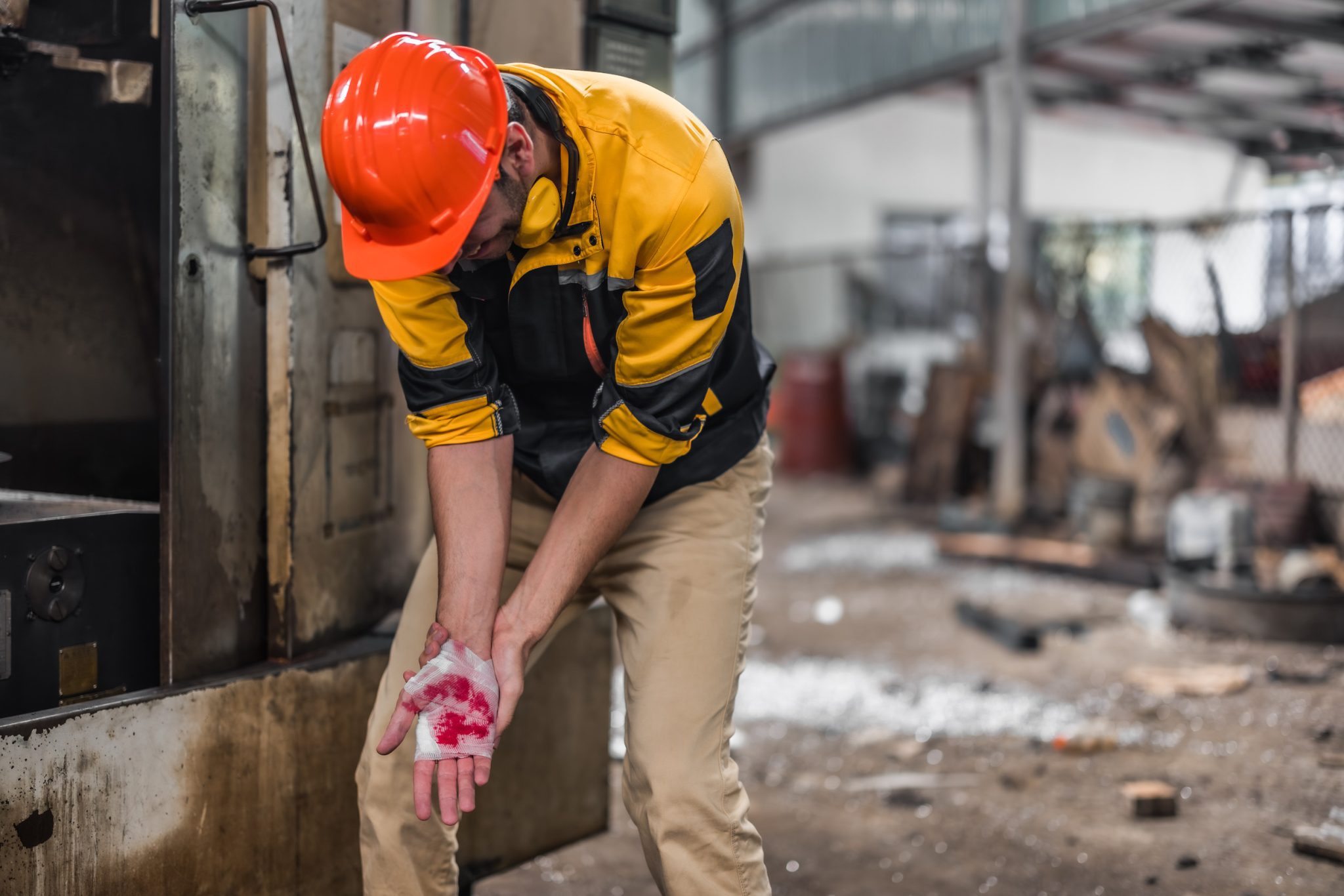
You may be entitled to make a factory accident claim if you were injured because your employer failed to take reasonable steps to keep you safe at work. Factory accident claims can involve machinery accidents, forklift truck collisions, manual handling injuries, slips and trips, chemical exposure, burns, falling objects, conveyor belt accidents, crush injuries, and unsafe workplace systems. Compensation may help cover pain and suffering, lost earnings, medical costs, rehabilitation, care needs, travel expenses, and the wider impact the injury has had on your life.
Factory work can be physically demanding, fast-paced, and high-risk. Many roles involve machinery, vehicles, heavy loads, production lines, sharp tools, chemicals, repetitive tasks, and strict deadlines. When safety procedures are not followed properly, the consequences can be serious.
A factory accident can affect your health, income, confidence, and ability to keep working. Some injuries heal with treatment and rest, while others can leave lasting pain, reduced movement, scarring, psychological trauma, or long-term disability. You may also be worried about claiming while still working for the same employer, especially if you are an agency, temporary, or zero-hours worker.
At Legal Expert, we understand how stressful workplace injuries can be. Our experienced solicitors understand how factory accident claims work and can help gather evidence, explain your rights, deal with insurers, and support you throughout the claims process. We offer a free consultation where you can discuss what happened, understand your options, and find out whether compensation may be possible.
To speak with us today and get free advice, please reach out to us by tapping below.
4.8 (466 reviews)
We're No Win No Fee Solicitors Trusted by thousands to win compensation.
To learn more about factory accident claims, when compensation may be possible, and how the claims process works, please keep scrolling.
What Are Factory Accident Claims?
Factory accident claims are workplace injury claims made after someone is injured in a factory, warehouse, manufacturing site, production facility, or industrial workplace because an employer, contractor, or other responsible party failed to keep them reasonably safe.
These claims can involve sudden accidents, such as being struck by a forklift truck or injured by machinery. They can also involve conditions that develop over time, such as hearing loss, repetitive strain injuries, or health problems linked to exposure to hazardous substances.
To make a successful factory accident claim, it will usually need to be shown that:
Your employer or another responsible party owed you a duty of care
That duty was breached through negligence or unsafe working practices
You suffered physical or psychological harm as a result
The main legislation that places a duty of care on employers is the Health and Safety at Work etc. Act 1974. In simple terms, employers must take reasonable steps to protect workers from avoidable harm.
Factory injuries can range from minor cuts and soft tissue injuries to serious harm such as chemical burns, head injuries, crush injuries, amputations, and long-term industrial illness.
Can I Make A Factory Accident Claim?
You may be able to make a factory accident claim if your injury happened because your employer failed to provide a reasonably safe workplace, safe equipment, proper training, appropriate supervision, or suitable protective equipment.
Examples of employer negligence in a factory may include:
Failing to maintain machinery properly
Not installing suitable guards on dangerous equipment
Allowing untrained workers to use machinery or vehicles
Failing to separate pedestrians from forklift trucks or other workplace vehicles
Not providing safe manual handling procedures
Failing to control chemical, dust, noise, or vibration risks
Not every factory accident will result in compensation. However, if the accident was caused by unsafe working conditions, inadequate training, defective equipment, poor maintenance, or a failure to follow health and safety procedures, you may have grounds to claim.
If you are unsure whether your workplace accident was your employer’s fault, our advisors can discuss what happened and give you free, practical guidance.
Factory and warehouse employers have a legal duty to take reasonable steps to keep workers safe. This duty applies across the workplace, including production lines, loading bays, machinery areas, storage spaces, walkways, staff areas, and any place where work activities are carried out.
Steps employers may need to take include:
Maintaining a safe working environment – factories should be kept free from avoidable hazards such as spillages, trip risks, poor lighting, unsafe storage, and defective flooring
Providing adequate training – inadequate training in machinery use, manual handling, forklift routes, emergency procedures, or workplace hazards can increase the risk of injury
Maintaining safe work equipment – employers must ensure machinery, tools, vehicles, production equipment, and guards are suitable, maintained, and safe to use
Providing Personal Protective Equipment – suitable PPE should be provided where risks cannot be controlled in another way
Carrying out risk assessments – employers should identify hazards and implement reasonable measures to reduce risk
Recording and reporting workplace accidents – employers should keep an accident report book and report serious incidents to the relevant authorities where required
The Health and Safety Executive is the UK regulator for workplace safety. HSE guidance, accident reports, inspection records, or enforcement action may sometimes be relevant evidence in factory accident claims.
What Are The Six Pack Regulations?
The “six pack” regulations are a group of workplace health and safety regulations introduced in the 1990s. They help define how employers should manage risks and protect workers.
Not every regulation applies to every factory accident. However, these rules show how wide-ranging an employer’s safety duties can be. If you are unsure which legal duties may apply to your workplace injury, Legal Expert can review your circumstances and explain your options.
What Types Of Factory Accidents Could Lead To Compensation?
Factory accidents can happen in many different ways. Some involve obvious hazards, such as unguarded machinery or forklift collisions. Others happen because safety procedures slowly break down, equipment is not maintained, or workers are pressured to meet production targets without enough support.
Machinery Accidents In Factories
Machinery accidents can cause some of the most serious factory injuries. Workers may suffer crush injuries, cuts, fractures, burns, amputations, or nerve damage if machinery is defective, poorly guarded, badly maintained, or used without adequate training.
Claims may arise where:
Machine guards were missing or defective
Emergency stop buttons were not working or not accessible
Workers were not trained properly
Equipment was not maintained or inspected
Safety procedures were ignored because of production pressure
A worker’s hand, arm, clothing, or hair became trapped in machinery
Factories using dangerous machinery should have clear procedures in place. If unsafe machinery caused your injury, the accident should be investigated carefully and evidence should be preserved where possible.
Forklift Truck And Workplace Vehicle Accidents
Forklift trucks, lift trucks, pallet trucks, and other workplace vehicles are common in factories and warehouses. When vehicle routes are poorly managed, the consequences can be severe.
Factory vehicle accidents may involve:
Forklifts striking pedestrians
Reversing accidents
Loads falling from vehicles
Untrained or poorly supervised operators
Poor visibility in loading areas
Failure to separate pedestrians and vehicles
Unsafe speed or lack of warning systems
In our experience, these claims often depend heavily on CCTV, witness evidence, training records, risk assessments, traffic management plans, and maintenance records.
Manual Handling And Lifting Injuries
Factory workers often lift, carry, push, or pull materials, tools, products, boxes, or stock. Manual handling injuries may happen suddenly, or they may develop over time through repeated strain.
Common failures include:
No manual handling training
Heavy or awkward loads being moved without assistance
No lifting aids or unsuitable equipment
Repetitive lifting without rest breaks
Workers being asked to lift beyond safe limits
Poor workplace layout forcing awkward movements
These accidents can cause back injuries, neck injuries, shoulder injuries, hernias, wrist injuries, and soft tissue damage.
Slips, Trips And Falls In Factories
Slips, trips, and falls are common in factory and warehouse environments. HSE statistics show that slips and falls on the same level account for a significant proportion of non-fatal workplace injuries. You can read more in the HSE’s workplace injury statistics.
Even a simple fall can cause fractures, head injuries, soft tissue injuries, back injuries, or time away from work.
Falls From Height
Falls from height may happen in factories where workers use ladders, platforms, loading bays, mezzanine floors, racking systems, or raised work areas.
Claims may arise where workers are not given suitable equipment, safe access routes, guardrails, training, or supervision. Falls from height can cause life-changing injuries, so these risks should be managed with particular care.
Conveyor Belt And Production Line Accidents
Production lines and conveyor systems can present serious risks where equipment is poorly guarded or workers are exposed to moving parts.
A faulty conveyor or unsafe production line may lead to crush injuries, entanglement, hand injuries, repetitive strain, or trapping accidents. Claims may also arise if workers are required to work at an unsafe pace or if maintenance is carried out without proper lock-off procedures.
Chemical Exposure And Burn Injuries
Factories may involve hazardous chemicals, fumes, dust, hot surfaces, steam, open flames, electrical equipment, or heated materials. Injuries can include chemical burns, respiratory problems, skin irritation, eye injuries, or long-term illness.
Factory and warehouse workers may be injured by falling stock, materials, tools, pallets, or poorly stacked goods.
These accidents may happen because of overloaded racking, poor storage systems, inadequate forklift operation, damaged shelving, or unsafe stacking. Injuries can include head injuries, fractures, crush injuries, and cuts.
Noise, Vibration And Long-Term Industrial Injuries
Not every factory injury happens in a single incident. Some workers develop health problems after repeated exposure to noise, vibration, dust, or repetitive tasks.
Examples may include hearing loss, hand-arm vibration syndrome, repetitive strain injuries, or respiratory conditions. These claims may rely on medical evidence, exposure history, and the date when the worker first knew their condition was linked to work.
Common Injuries In Factory Accident Claims
Factory accident claims can involve a wide range of injuries. Some are relatively minor, while others can affect a person’s ability to work, live independently, or return to the same role.
Crush Injuries And Amputations
Crush injuries can happen when a limb, hand, foot, or other body part is trapped between machinery, vehicles, falling materials, or heavy objects. Severe crush injuries may lead to nerve damage, tissue damage, fractures, reduced function, or amputations.
Broken Bones And Fractures
Factory workers may suffer broken bones after falls, forklift collisions, falling object accidents, crush incidents, or machinery accidents. Fractures may require surgery, plaster casts, physiotherapy, and time away from work.
Back, Neck And Shoulder Injuries
Back, neck, and shoulder injuries are common in manual handling, lifting, pushing, pulling, and repetitive work. These injuries can be painful and may affect sleep, driving, mobility, and the ability to continue working in a physically demanding role.
Burns And Scalds
Burns may be caused by chemicals, hot machinery, steam, heated materials, flames, electrical faults, or unsafe processes. Some burn injuries heal well, while others may cause scarring, nerve damage, infection risk, or psychological trauma.
Cuts, Lacerations And Scarring
Cuts and lacerations may be caused by sharp tools, metal edges, machinery, glass, packaging equipment, or defective safety systems. More serious wounds can damage tendons, nerves, blood vessels, or tissue down to the bone.
Head And Brain Injuries
Head injuries can result from falls, falling objects, vehicle collisions, or being struck by equipment. Symptoms may include headaches, dizziness, confusion, memory problems, mood changes, and reduced concentration.
Eye Injuries
Eye injuries may happen where workers are exposed to debris, chemicals, dust, sparks, or flying fragments. Factors can include lack of eye protection, defective equipment, poor guarding, or inadequate safety controls.
Psychological Trauma After A Factory Accident
Factory accidents can be frightening, especially where machinery, crush injuries, amputations, serious burns, or near-fatal incidents are involved. Anxiety, flashbacks, low mood, sleep disturbance, and post-traumatic stress symptoms may form part of a claim where supported by medical evidence.
Can Agency, Temporary Or Zero-Hours Factory Workers Claim?
Yes, agency, temporary, and zero-hours workers may be able to make factory accident claims if unsafe working conditions caused their injuries.
Many workers wrongly assume they cannot claim because they are not permanent employees. In reality, the party controlling the workplace may still owe duties to keep workers reasonably safe, provide suitable training, assess risks, and ensure safe systems of work.
Evidence in these claims may include:
Agency communications
Shift records
Training records
Workplace instructions
Witness statements
Accident reports
If you are unsure who may be responsible for your injury, our advisors can help identify whether the agency, host employer, site operator, or another party may be involved.
Can I Claim If I Still Work For The Factory?
Many injured workers worry about claiming compensation while still working for the same factory. This concern is completely understandable, especially if you rely on the job financially or feel unsure how your employer will respond.
In most workplace injury claims, compensation is paid by the employer’s liability insurer rather than directly from the employer’s own funds. Employers are generally required to have insurance to cover valid workplace injury claims.
You should not be treated unfairly for bringing a genuine claim. However, because every workplace situation is different, it is sensible to get confidential legal advice if you are worried about job security, workplace pressure, or how to report the accident.
What If My Employer Says The Accident Was My Fault?
A factory accident claim may still be possible even if your employer says you caused the accident yourself.
Employers sometimes argue that a worker:
Failed to follow training
Did not wear PPE
Used machinery incorrectly
Entered an unsafe area
Ignored instructions
However, the wider circumstances must also be considered. For example, was the training suitable? Was PPE actually provided? Was the worker under pressure to meet production targets? Were safety guards missing? Was the unsafe practice common or tolerated by supervisors?
If both sides share some responsibility, this may be treated as contributory negligence. Compensation may still be awarded, but it could be reduced to reflect the worker’s share of responsibility.
What Should You Do After A Factory Accident?
The steps you take after a factory accident can help protect your health and preserve important evidence.
After a workplace accident, you should consider the following:
Seek medical attention as soon as possible
Report the accident to your employer or supervisor
Make sure the incident is recorded in the accident book
Ask for a copy of the accident report
Take photographs of the scene, hazard, machinery, PPE, and visible injuries
Gather witness names and contact details
Write down what happened while it is fresh in your mind
Keep payslips, receipts, medical letters, and appointment records
Ask whether CCTV footage is available
Get legal advice if you are unsure where you stand
Even if you have not managed to collect all of this evidence, you may still be able to claim. A solicitor can help identify what records may be requested later.
What Evidence Helps Support Factory Accident Claims?
A strong body of evidence can make a significant difference to the outcome of a factory accident claim. Evidence helps prove how the accident happened, who may be responsible, what injuries were suffered, and what losses were caused.
Useful evidence may include:
Accident reports – workplace accident book entries can show when and how the incident was reported
Medical records – these can document the injury, treatment, symptoms, and likely recovery
Witness details – colleagues or other witnesses may later provide statements
Photographs and video – these may show the accident scene, defective equipment, poor housekeeping, damaged PPE, or visible injuries
CCTV footage – factory and warehouse sites often have cameras covering production lines, entrances, loading bays, and vehicle routes
Training records – these may show whether you were trained properly for the task
Risk assessments – these can show whether known hazards were properly considered
Maintenance logs – these may be important where machinery, equipment, forklifts, or vehicles were involved
PPE records – these can show whether suitable protective equipment was provided
HSE or RIDDOR records – serious workplace accidents may need to be formally reported
Financial records – payslips, bank statements, invoices, and receipts can help prove financial losses
A diary of symptoms – a diary can show how your injury affects work, sleep, mobility, mood, and daily life over time
If you are worried that evidence may disappear, it is best to seek advice promptly. Our solicitors can help request relevant documents where appropriate.
How Much Factory Accident Compensation Could You Receive?
The amount of compensation awarded in successful factory accident claims depends on the seriousness of the injury, the length of recovery, the impact on work and daily life, and the financial losses caused.
Factory injury compensation may be made up of general damages and special damages.
General damages compensate for physical and psychological harm. A personal injury solicitor or other party valuing the claim may review your medical evidence and compare it with guideline brackets from the Judicial College Guidelines.
The compensation calculator below includes guideline figures from the Judicial College Guidelines and can help give you a general idea of what may be awarded. For a more personal estimate based on your specific injury, recovery and losses, please get in touch with our team.
Free estimate tool
Personal Injury Compensation Calculator
Get a free and quick compensation calculation. Simply select an injury and find the estimated payout.
Figures are based on the 18th edition of the Judicial College Guidelines, published on 9 April 2026.
Compensation payouts could be higher as these figures only relate to physical injuries.
These estimates do not include financial losses like loss of earnings, care costs, travel expenses or medical treatment.
What Can Factory Injury Compensation Cover?
Special damages compensate for financial losses caused by the factory accident. These are not automatic, so you will need evidence to show what you have lost or spent.
Evidence may include payslips, bank statements, invoices, receipts, travel tickets, medical letters, and care records.
Who Pays The Compensation For An Industrial Accident?
If you make a factory accident compensation claim against your employer, you may be concerned about where the money comes from. In most cases, compensation is paid by the employer’s liability insurer.
Employers are generally required to have insurance in place to cover claims made by employees for workplace injuries. This is one reason you should not assume a claim will personally harm your employer or colleagues.
If you would like to understand how compensation may be calculated in your own case, our team can provide a free consultation.
4.8 (466 reviews)
We're No Win No Fee Solicitors Trusted by thousands to win compensation.
Can I Claim On Behalf Of A Loved One Who Was Injured In A Factory Accident?
You may be able to claim on behalf of a loved one if they cannot manage their own claim. This may apply where the injured person is under 18 or lacks the mental capacity to claim for themselves.
A suitable adult may be appointed as a litigation friend. Their role is to make decisions in the injured person’s best interests during the claim.
This can be particularly important in serious factory accident claims involving brain injuries, amputations, severe burns, or long-term disability. If you are unsure whether you can act for a loved one, Legal Expert can explain the process and your options.
Time Limits For Factory Accident Claims
Under the Limitation Act 1980, you will generally have three years from the date of the accident to start a personal injury claim.
There are exceptions. For example:
If the injured person was under 18, the time limit usually does not start until their 18th birthday
If the injured person lacks mental capacity, the time limit may be suspended unless capacity is regained
If the injury developed over time, the three-year period may run from the date of knowledge, when you first knew or should reasonably have known that your condition was linked to your work
You can also check our guide on the accident at work claim time limit for more information.
Time limits can be strict, so it is sensible to seek advice as soon as possible.
How Long Do Factory Accident Claims Take?
The time it takes to settle a factory accident claim depends on the circumstances. Some claims can settle more quickly where liability is admitted and medical evidence is straightforward. More serious or disputed claims may take longer.
Factors that can affect the timeline include:
Whether the employer or insurer admits liability
The severity of the injury
Whether further medical treatment is needed
Whether the long-term prognosis is clear
Whether future lost earnings or care costs need to be calculated
Whether expert evidence is needed
Whether court proceedings become necessary
It is important not to settle a serious injury claim too early if the long-term impact is not yet clear. A solicitor can help ensure your compensation reflects your full recovery picture and future needs.
No Win No Fee Factory Accident Claims
Our solicitors may be able to handle eligible factory accident claims on a No Win No Fee basis under a Conditional Fee Agreement.
This usually means:
You do not pay solicitor service fees upfront
You do not pay solicitor service fees while the claim is ongoing
You do not pay solicitor service fees if the claim is unsuccessful
If the claim succeeds, a legally capped success fee is deducted from your compensation
This type of agreement can make it easier to access legal support without worrying about paying solicitor fees before your claim begins.
You can also read more about claiming compensation on a No Win No Fee basis.
How Legal Expert Can Help With Factory Accident Claims
At Legal Expert, we understand that factory injuries can affect your health, work, family life, and financial stability. We also understand that making a claim against an employer can feel daunting, especially if you still work at the factory or are unsure whether you have enough evidence.
If your claim is accepted, our solicitors can help by:
Assessing whether you have a valid factory accident claim
Gathering evidence such as accident reports, medical records, CCTV, and witness details
Requesting relevant workplace records where appropriate
Arranging medical evidence
Explaining legal terms clearly
Communicating with the defendant or insurer
Calculating compensation for your injuries and financial losses
Keeping you updated throughout the claims process
In our experience, a free consultation can help injured workers understand where they stand before making any decisions. You can ask questions, explain what happened, and receive clear guidance on whether compensation may be possible.
To speak with us today and get free advice, please reach out to us by tapping below.
Below, you can find answers to some common questions about factory accident claims.
Can I make a factory accident claim?
Yes, you may be able to make a factory accident claim if you were injured because your employer or another responsible party failed to take reasonable steps to keep you safe at work.
What evidence do I need for a factory injury claim?
Useful evidence may include accident reports, medical records, witness details, photographs, CCTV footage, training records, risk assessments, maintenance logs, PPE records, HSE records, and proof of financial losses.
Can I claim if I was injured by factory machinery?
Yes, you may be able to claim if unsafe machinery, missing guards, defective equipment, poor maintenance, or inadequate training caused your injury.
Can I claim after a forklift accident in a factory?
Yes, forklift accident claims may be possible where poor training, unsafe vehicle routes, lack of pedestrian segregation, poor supervision, or negligent operation caused the accident.
Can agency workers make factory accident claims?
Yes, agency workers may be able to claim if the party responsible for their safety failed to manage workplace risks properly.
Can I claim if I still work for the same factory?
Yes, you may still be able to claim if you continue working for the same factory. Compensation is usually handled by the employer’s liability insurer.
What if my employer says the accident was my fault?
A claim may still be possible. If your employer argues that you were partly responsible, evidence will be needed to assess whether unsafe working conditions, inadequate training, missing PPE, or other failures contributed to the accident.
How much factory accident compensation could I receive?
Compensation depends on the severity of your injury, recovery time, financial losses, future care needs, lost earnings, and the overall impact on your life.
How long do I have to make a factory accident claim?
You generally have three years from the accident date to start a personal injury claim. Different rules may apply for children, people lacking mental capacity, or injuries that develop over time.
Can psychological trauma be included in a factory accident claim?
Yes, psychological trauma such as anxiety, depression, flashbacks, or PTSD may form part of a factory accident claim where supported by medical evidence.
Can I make a No Win No Fee factory accident claim?
Yes, many factory accident claims can be pursued on a No Win No Fee basis, depending on the circumstances.
Learn More
Below, you can find related workplace injury claim guides from across our site.
Here we look at how to prove fault in slip and fall claims
We hope after reading our guide you understand more about making warehouse and factory accident claims. Get in touch with our team to claim on behalf of yourself or a loved one.
 Skip to content