A civil claim for military medical negligence can be made by any member of the armed forces, including veterans, if they experience avoidable pain and suffering while receiving care from a military healthcare provider. Service in the armed forces comes with a degree of occupational hazard, so it is vital that personnel and civilian employees receive prompt, appropriate treatment when they need it most. When a failure to meet standards results in unnecessary suffering for a patient, this is considered medical negligence.
At Legal Expert, we firmly believe that members of the armed forces should expect the same standards of medical care as civilians. If you’re navigating the physical, psychological, and financial fallout of receiving substandard care, we are here to provide the compassionate support you deserve. Our dedicated solicitors have years of experience handling claims of all varieties, including against the armed forces. We can provide a bespoke service that is built around your specific needs and ensure your claim has the best possible chance of success.
Whether you are or were an aviator, sailor, or soldier, reach out to our advisors today for a free eligibility consultation or answers to any questions you may have.

 4.8 (466 reviews)
 What Are Military Medical Negligence Claims?
Claims for military medical negligence are a type of civil claim made by serving armed forces personnel, reservists, veterans, and civilian employees who have experienced avoidable harm as a result of substandard medical care provided by defence medical services. Civil claims are typically brought against the Ministry of Defence (MoD) rather than individual medical officers or other staff. Some cases of negligence may involve civilian healthcare providers acting on behalf of the MoD.
In addition to making a civil claim, you can pursue compensation through the government-funded Armed Forces Compensation Scheme (AFCS). This can be pursued alongside a civil claim, and we’ll take a more detailed look at the AFCS shortly.
Combat Immunity In Civil Claims For Military Medical Negligence
One of the most important considerations when pursuing a civil claim is the defence of ‘combat immunity.’ This is because UK law recognises that the fast-moving, unpredictable, and dangerous environment of the battlefield presents distinct challenges.
This defence means that service personnel typically cannot pursue a claim for harm caused by negligent medical care that directly arises from combat conditions or the risks inherent in an active operational environment. Therefore, the MoD would generally not be held liable for harm resulting from decisions made by medical officers and combat medics under the strain of limited resources, enemy fire, and the pressure of delivering life-saving treatment.
However, combat immunity is not automatic; the doctrine applies only in specific circumstances. While tactical decisions made in the heat of battle are typically protected by combat immunity, personnel and civilian employees could still bring a claim for negligent medical treatment where they suffer avoidable harm that was not an inherent risk of service. For instance, medical officers might fail to follow proper procedures for cleaning surgical wounds at a field hospital, resulting in sepsis in the patient.
You can learn more about making a civil claim for military medical negligence by contacting our advisors today.
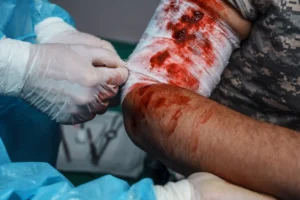
Can I Make A Military Medical Negligence Claim?
Yes, you can make a civil claim for military medical negligence if you can show that a failure to meet the correct standards of medical care caused you to suffer avoidable harm and ‘combat immunity’ did not apply. That is to say, any harm experienced that would not have occurred had the correct standards been upheld.
Military medical staff have the same obligations as those working in the NHS or private healthcare settings: provide care to all patients that meets the correct standard. Therefore, a claim could be made if you can establish negligence by meeting the following criteria:
- A duty of care was owed: A duty of care is a legal obligation to uphold the safety or well-being of others. For medical professionals, that duty is to provide care that meets the correct standard. This may have been provided in the UK or overseas, whether on active deployment, during training exercises, or while on a military base.
- This duty was breached: A failure to meet those standards is deemed a breach of duty. This can occur due to errors during surgery at a field hospital, incorrect medication administration, or inadequate monitoring of injured personnel or civilian employees.
- That breach caused you to experience avoidable harm: If a failure to meet standards results in a patient experiencing avoidable harm, this is deemed medical negligence. The exact nature of the harm caused can vary, but as long as there is medical recognition of it, compensation can be sought.
While the general eligibility requirements for civil claims are outlined above, additional considerations (e.g., the defence of combat immunity) may apply to claims for military medical negligence.
Can I Make A Claim Through The Armed Forces Compensation Scheme (AFCS)?
Yes, you can make a claim through the government-funded Armed Forces Compensation Scheme (AFCS), whether or not you are seeking to make a civil claim as well. The AFCS is a no-fault scheme, meaning compensation can be sought for illness, harm, or death arising from military service without the need to prove or establish negligence (unlike in civil claims).
There are 2 types of AFCS awards that can be paid out to claimants tax-free:
- A lump sum.
- A Guaranteed Income Payment (GIP) paid out monthly.
While you can pursue both a civil and AFCS claim, it is important to keep in mind that the scheme cannot give you payouts for any harm you’ve already been compensated for. Additionally, when making a civil medical negligence claim, you will need to declare any compensation that was awarded through the AFCS.
Certain time limits also apply depending on the circumstances of your injury, so it’s important to seek proper advice. You can reach out to our team today via the contact information given below.
Examples Of Medical Negligence In The Military
Examples of medical negligence in the military are much the same as those in other healthcare settings, as mistakes relating to surgeries, medications, and diagnoses can all arise. However, there are specific nuances associated with the military environment. We’ve listed some potential medical negligence incidents for you here:
- Surgical errors: Mistakes during procedures performed in operational field hospitals or military healthcare facilities may involve wrong-site surgery, retained foreign objects, or nerve damage.
- Wound mismanagement: Inadequate treatment of gunshot or shrapnel wounds can occur because of surgical errors, poor aftercare, and a failure to arrange or correctly interpret diagnostic scans (e.g., X-rays or CT scans).
- Improper blast injury treatment: Internal damage may be missed due to a failure to perform neurological evaluations, or if symptoms of a traumatic brain injury (TBI) are ignored or misdiagnosed as purely psychological.
- Hygiene failures: Unwashed hands and unsterilised instruments during wound cleaning can lead to infections, including MRSA and sepsis.
- Medication errors: Medical staff may administer the wrong dose or the wrong medication altogether. Medication could also be given to personnel with known drug allergies, such as mefloquine.
- Inadequate fitness assessment: A failure to document physical or psychological limitations can result in personnel being assigned tasks that conflict with their required medical grading. This can exacerbate existing conditions or cause additional harm.
- Inadequate mental health care: Substandard care for service personnel or veterans with PTSD or other psychological conditions can lead to preventable deterioration and harm.
To find out more about claiming in your specific circumstances, speak to a member of our dedicated advisory team today.

How Much Military Medical Negligence Compensation Can I Claim?
Generally, how much military medical negligence compensation you can claim depends on the degree to which you have suffered unnecessarily and how this impacts you financially. Payouts in civil claims are determined under 2 separate heads of loss, which are:
- General damages cover the physical harm caused to you as well as any psychological effects.
- Special damages may be awarded for financial losses arising from the harm you suffered, but we will examine them in greater detail in the next section.
Our solicitors can refer to any medical evidence provided, along with the figures from the Judicial College Guidelines (JCG), when calculating a potential compensation figure for general damages. They may use the JCG because it pairs guideline brackets of compensation with many types and severities of harm.
We have taken some of these guidelines, the top entry aside, and created this compensation table.
Compensation Table
Please be aware that the information provided here is intended to serve as guidance only.
| Type of Harm | Severity | Compensation Guideline |
|---|---|---|
| Very Serious Harm with Special Damages (e.g., Lost Income, Therapy, and Care Costs) | Very Serious | Up to £1,000,000 + |
| Brain Damage | Very Severe, May Be Some Capacity to Follow Simple Commands | £344,150 to £493,000 |
| Moderate (c)(iii), Memory and Concentration Affected | £52,550 to £110,720 | |
| Severe Leg Harm | Severe (b)(i), The Most Serious Injuries Short of Amputation | £117,460 to £165,860 |
| Severe (b)(ii) Very Serious, With Permanent Mobility Problems | £66,920 to £109,290 | |
| Other Arm Damage | Substantial and Permanent Disablement | £47,810 to £73,050 |
| Chest Harm | Permanent Damage to Organs (b) | £80,240 to £122,850 |
| Some Continuing Disability (c) | £38,210 to £66,920 | |
| Knee Damage | Severe (a)(iii), May Be Limited Movement or Instability | £31,960 to £53,030 |
| Moderate (b)(i), With Wasting and Minor Instability | £18,110 to £31,960 |
To find out more about medical negligence compensation in civil claims, contact our advisors today.
4.8 (466 reviews) Can I Claim For Other Losses Caused By Military Medical Negligence?
Yes, you can claim for other losses caused by military medical negligence, specifically relating to the financial impact of your unnecessary suffering. Costs incurred because of the avoidable harm you endured can be compensated under special damages, and some examples have been provided here.
We should stress that special damages may account for both past and future losses, which means such payouts are often substantially higher than the associated general damages. Examples include:
- A loss of earnings if you are unable to resume your normal duties within the military. Special damages can also account for future income losses, such as those arising from missed promotions and pension benefits.
- Medical expenses like physiotherapy, specialist private treatment, prosthetics, and psychological support.
- Care and support in the home if you are unable to complete domestic duties safely on your own. This may include preparing meals, caring for children, and performing cleaning and maintenance duties.
- Transport costs, such as to and from hospital appointments.
- Modifications to your home if your mobility has been impacted. For instance, you may have needed to install a walk-in shower, handrails, door ramps, and assistance alarms.
Make sure you hold onto documentation such as your payslips, purchase receipts, and other bills as proof of the losses you have incurred. This is important because special damages can be claimed only if there is supporting evidence.
If you’d like further guidance on how compensation can be awarded in civil claims, please don’t hesitate to contact our team for confidential advice.

What Will I Need To Bring A Medical Negligence Claim Against The Military?
To bring a civil medical negligence claim against the military, you will need to provide evidence showing how you experienced unnecessary suffering due to substandard care received from the armed forces’ medical system. Other key steps have been set out below.
Seek Appropriate Medical Attention
Following any incident of medical negligence, ensuring you receive the necessary care is essential to protecting your health. Although it may take some time to realise that harm has been caused, getting the required treatment as soon as possible can help prevent more serious consequences. While your health is of paramount importance to us, your medical records can also act as really good evidence if you decide to pursue a civil medical negligence claim.
Collect Supporting Evidence
Once you are safely able to do so, you can begin collecting evidence which could be used if you make a civil claim. This can include:
- Medical records, as discussed above. You may request copies of your post-surgical reports, the results of any testing performed, and copies of scans (e.g., X-rays or CT scans). These are very useful in not only showing what harm you sustained, but they can also be a big help to those determining a compensation value.
- A completed Form 510, which can provide an official record of the incident.
- Members of your medical team, family members who attended hospital appointments, or fellow service personnel may be able to provide witness statements. Pass on any relevant contact details so the solicitor can take down their account of what occurred and use it to draft supportive testimony.
- Document any visible signs of the harm you suffered with clear, high-quality photographs.
Report The Incident
In the context of medical negligence, reporting the incident will require notifying your superior officer, your unit’s medical officer, or another member within your chain of command. An incident report may also be submitted via Form 510, which formally details what happened to you.
While this isn’t necessary to make a civil claim for compensation, doing so can add to your body of evidence and show you attempted to resolve things amicably.
Record How The Negligence Has Impacted You And Your Day-To-Day Life
Maintaining a diary adds a more human layer to your evidence. Note down what happened, the treatments you have had, and the effect they have had on you. You can also detail how the harm you suffered has affected your ability to perform day-to-day activities and military duties.
Consult A Legal Professional
Getting good advice from a trained legal professional, while not required in order to make a civil claim, can be beneficial. An experienced solicitor can help explain the claims process in more detail, inform you of how likely your case is to succeed, and provide a range of supportive services, as you’ll see below.
To speak to one of our specialist medical negligence solicitors, contact our advisory team for a quick eligibility check. If you have a valid case, you can be put through to a knowledgeable and professional solicitor who suits your particular needs.
Abide By The Time Limits
Each civil claim needs to be made within the relevant time limit, also known as a limitation period. Typically, this will be 3 years from the date of the incident, but certain exceptions to this may apply. This is particularly relevant in medical negligence cases, where the impact is not always immediately apparent. In such scenarios, the time limit may instead begin from when you became aware of the negligence.
Make sure you seek the right legal advice as soon as possible so that any civil claim you pursue can begin without risking the time limit expiring. Our advisors are here 24/7, so you can rest assured you’ll always get a quick response.
Why Claim Military Medical Negligence Compensation With Legal Expert?
By choosing to make a civil claim for military medical negligence compensation with Legal Expert, you are choosing to work with solicitors who have years of experience and a long list of satisfied clients. We’ve already won over £85 million in compensation for more than 12,000 clients, and you could be next.
Here are just a few of the ways one of our dedicated solicitors can assist you and the services they can provide:
- Conducting your civil claim to the highest possible standards of professionalism and discretion in line with the SRA Code of Conduct.
- Connecting you with the right medical specialists to get you the care, rehabilitation, and other treatment required to cope with the harm sustained.
- Assisting you with gathering supporting evidence for the claim.
- Using that evidence to help determine a compensation figure that reflects both the harm caused to you and any financial losses you have incurred.
- Communicating with the defendant’s representatives and updating you on the claim’s progress.
- Negotiating the final settlement.
There are, of course, many other ways Legal Expert can support you throughout the claims process. So, to find out more about what we can do for you, or get a free eligibility check, speak to our advisory team today.
No Win No Fee Medical Negligence Claims Against The Military
No Win No Fee medical negligence civil claims against the military are the most straightforward way to seek compensation and get access to expert legal representation. Our solicitors work to specific No Win No Fee terms under a type of contract called a Conditional Fee Agreement (CFA). In short, it means that you won’t be paying any service fees to the solicitor at the following stages of the claims process:
- Before starting your claim for military medical negligence.
- For the duration of the claim.
- If you are unsuccessful.
Your solicitor will receive a percentage of your compensation if your claim wins. This aptly named ‘success fee’ is kept small, as the percentage is subject to a legally binding cap per The Conditional Fee Agreements Order 2013. So, you can be assured that you will receive the largest share of the compensation. Success fees are agreed upon before the claim even gets underway, so from the very outset, you know exactly where you stand.
Contact Our Solicitors
You can get in touch with one of our highly capable medical negligence solicitors by first contacting our advisory team. An advisor can assess your eligiblity for free and, if you have a valid claim, ensure you are connected with the right solicitor for you.
Talk to us today using the contact information given here:
- Call us on 0800 073 8804.
- You can also contact us online using this form.
- Or, click the live chat button in the bottom left of the screen now.

More Information
Read some of our other guides on different types of medical negligence claims here:
- Find out more about anaesthetic negligence claims with this guide.
- Learn if you could claim after falling out of bed in a hospital.
- See if you could claim for prescription errors in hospitals using our detailed guidance.
We have also provided these additional resources, which we hope you will find useful:
- Find out where to access veterans and family support from the UK government.
- Read the standards for good medical practice from the General Medical Council (GMC).
- Learn more about the work of the Care Quality Commission on their website.
Thank you for taking the time to read our guide on making a civil claim for military medical negligence.