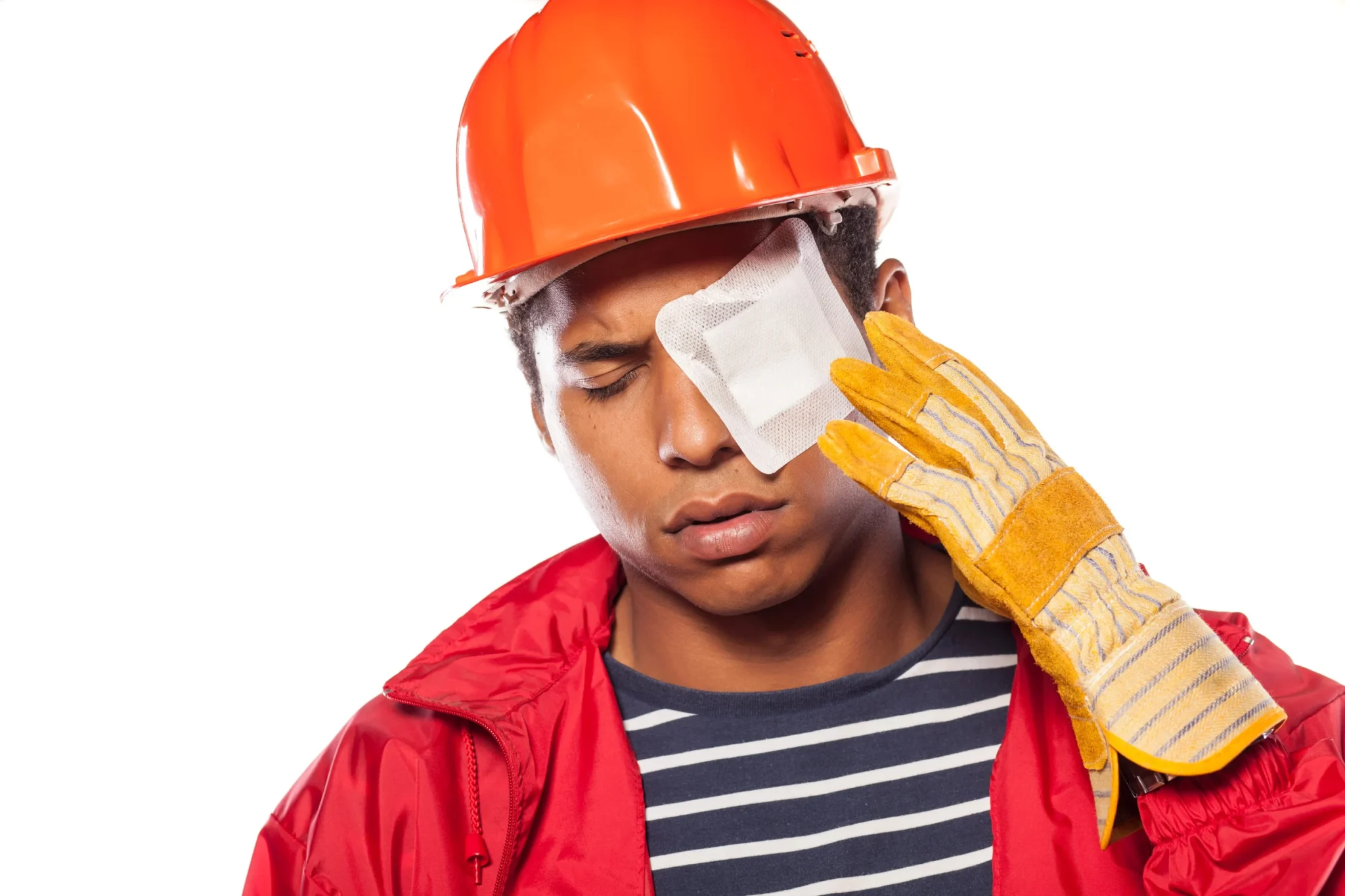
Losing your sight, even partially, can be one of the most frightening and life-changing experiences a person can face. One moment, everything may feel normal, and the next, simple tasks like reading, recognising faces, or moving around safely can become difficult.
If this has happened to you or someone close to you, you may be dealing with both the physical effects of vision loss and the emotional and practical challenges that follow. It is natural to feel concerned about your independence, your ability to work, and what the future may hold.
If your accident and resulting eye injury were caused by someone else’s actions or because they failed to keep you safe, you or a loved one may be able to make a loss of sight claim. This allows you to seek compensation for the physical, psychological, and financial impact of your injury, and can help provide a sense of justice following such a traumatic experience.
At Legal Expert, we understand that compensation cannot undo the harm caused. However, it can provide financial support for medical treatment, lifestyle adjustments, and any loss of income.
Our solicitors take a tailored approach, placing you at the centre of your claim. With years of experience, they can connect you with specialist ophthalmologists, rehabilitation professionals, and mental health support where needed. Additionally, our solicitors can assist you in making a claim on behalf of a loved one.
Get in touch with us for a free case consultation today. To reach our advisory team, you can:
In order to make a loss of sight compensation claim, we will need to show that someone else’s negligence led to your accident and subsequent vision loss. To do so, we must show that your case satisfies the following criteria:
You Were Owed a Duty of Care
In many areas of life including on the roads, whilst at work, in public or when receiving medical treatment, a peson or organisation owes you a duty of care. This means that they are responsible for your safety, including not causing incidents that could lead you to sfufering the loss of sight.
Per this duty of care, the liable third party in some situations must take certain steps in acting in a way that avoids causing you harm; whether this be providing you with appropriate eyegear for work, ensuring that hazards in public are fixed, providing medical eye treatment that reaches the expected standard or operating on the roads in a way to avoid causing harm to other road users.
This Duty Was Breached
We must then establish that the responsible party failed to uphold this duty of care. Typically, this arises when the liable party acts in a way that a reasonable person wouldn’t have; for example, if your employer fails to provide you with adequate personal protective equipment and as a result, your eye is struck by heavy machinery.
The Breach Led To Your Loss of Sight
Finally, it must be proven that you suffered physical or psychological harm as a result of the breach. This could include minor eye injuries, such as corneal abrasions, or more serious life-changing harm such as permanent blindness.
Additionally, you’re able to claim for any injury sustained, so long as it is medically recognised.
Sight Loss Claims On Behalf Of A Loved One
You could seek loss of sight compensation on behalf of a loved one in the case that they are unable to claim for themselves independently. This is called acting as their litigation friend, which is a role that can be appointed for claimants who:
Are under 18 at the time of the accident that led to loss of sight, as a minor is unable to claim on their own behalf
Are considered vulnerable adults who lack the mental capacity to claim independently
Acting in this position comes with a number of responsibilities and duties, including discussing the claim with the claimant’s legal representative and keeping them as informed as is possible.
To learn more about making sight loss claims for yourself or on behalf of a loved one, or for a free case consultation, please get in touch with us today.
What Accidents Could Result In Sight Loss Occurring?
Accidents involving direct trauma to the eyes, or traumatic head injuries can result in a loss of sight. These accidents can happen in various different environments, whether this be at work, in a road traffic accident or even in public.
In addition to this, negligent medical treatment can also lead to permanent eye damage or lost vision, as well as being a victim of a criminal injury. Below, we discuss a few illustrative examples of how these accidents can occur, and how they may result in lost sight.
Loss Of Sight At Work
There are a number of ways that an accident at work could lead to a loss of sight, including if:
You are working on a construction site, and are not provided with adequate personal protective equipment, such as protective goggles. As a result, a splitter of wood penetrates your eye, causing severe corneal abrasions leading to a permanent loss of sight in your left eye.
You’re told to work on a ladder that has known defects, yet your employer has failed to repair the ladder and still orders you to work on the ladder. When walking up one of the rungs, it gives way causing a fall from height, which results in an orbital fracture. This causes permanent vision loss in your eye.
Sight Loss After A Road Traffic Accident
Road traffic accidents can result in a loss of sight if:
Another road user is speeding, meaning they lose control of their vehicle. As a result, they cause a head-on collision, which causes your windscreen to smash following the impact. Shards of this windscreen cause facial lacerations and penetrating eye injuries to both of your eyes.
Whilst driving on the motorway, another car user is driving in the lane next to you. The third party driver is under the influence of alcohol, which causes them to swerve into your lane at speed. The direct impact of the rear-end collision causes your retina to detach, which requires immediate surgery to prevent a permanent loss of vision. You experience temporary vision loss, and are left unable to work for a number of months as a result.
Public Accident Caused Sight Loss
Public place accidents can lead to sight loss in many ways, for example:
Whilst in a local supermarket, a shelf that was in disrepair had a sharp edge which led to a penetrating eye injury. This causes permanent loss of sight in one eye.
A cleaner of an office building was using a strong chemical agent in the communal toilets. Due to the confined space, an office worker suffers a penetrative eye injury causing severe pain and tearing of the eyelids.
A surgeon selects the incorrect intraocular lens during cataract surgery, which results in very high pressure in your eye. This leads to a permanent loss of sight in one eye, significantly impacting your daily life.
If a serious eye condition such as glaucoma is missed or diagnosed too late, your treatment is delayed. This could allow the eye condition to worsen and in some cases, result in the complete loss of sight.
Criminal Injury Caused Loss Of Sight
Criminal injuries that cause loss of sight usually result from direct physical violence or attacks with weapons. A few ways that you could experience sight loss following a criminal injury include if:
You are knocked over during a physical altercation, resulting in your head hitting the pavement at force. This causes a traumatic brain injury that damages your occipital lobe, which means your brain can no longer process vision after the altercation.
During a domestic dispute, your partner attacked you in the face with an abrasive acid. This immediately resulted in permanent vision loss.
These examples aren’t the only way that you could experience an injury that leads to sight loss, but they are also examples of grounds to make a claim.
To discuss the particulars of your own case, please don’t hesitate to get in touch with us today.
Are There Different Types Of Sight Loss?
Yes, there are a number of different types of sight loss, usually categorised by how they impact vision. Central vision loss refers to the inability or difficulty to see clearly in the centre of your vision, which may affect your ability to see finer details, read or recognise faces.
Some more examples of the different types of vision loss include:
Peripheral vision loss Loss of side vision, sometimes called tunnel vision, which can make moving around safely more difficult.
Blurred vision Eyesight is not sharp or clear, making it hard to focus on objects at any distance.
Patchy or partial vision loss Gaps or blind spots in your vision, where parts of what you are looking at may be missing.
Night blindness Difficulty seeing in low light or darkness, which can affect activities like driving at night.
Colour vision deficiency Difficulty distinguishing between certain colours, depending on the severity.
Total vision loss Complete loss of sight, where there is no usable vision.
To learn more about the types of vision loss that you could seek compensation for, please get in touch with our advisory team today.
How Much Compensation Can Be Awarded For Loss Of Sight?
You could receive anywhere between £117,150 and £219,400 for the loss of sight in one eye and reduced vision in the remaining eye, per the guidelines found within the Judicial College Guidelines.
However, it can more helpful to determine how compensation is valued, to help provide an estimate of how much compensation you could be entitled to.
The amount of compensation you could receive in a successful loss of sight claim is dependent on the severity of your eye injury, the wider impact on your life and any associated financial losses caused as a result.
It can be helpful to look at how compensation is valued, usually being composed of two different heads of claim. These are:
General damages – compensation for the physical and psychological harm caused by loss of sight. Professionals can account for the extent of pain, suffering and any loss of amenity
Special damages – compensation for the out-of-pocket expenses incurred following the accident
Moreover, when general damages are being calculated, professionals can refer to frameworks such as the Judicial College Guidelines (JCG). This is a document which offers suggestive brackets of compensation for certain injuries and varying severities.
We’ve taken some figures from the JCG to show you some of the guidelines that are used when valuing loss of vision claims.
Please note that the top entry has not been taken from the JCG, and this table is illustrative only, not a guarantee of compensation.
Type of Injury
Severity
Compensation
Multiple Very Serious Forms of Harm + Financial Losses
Very Severe
Up to £1,000,000+
Eyes
Total Blindness
In the region of £327,940
Loss of Sight in One Eye with Reduced Vision in the Remaining Eye (i)
£117,150 to £219,400
Loss of Sight in One Eye with Reduced Vision in the Remaining Eye (ii)
£78,040 to £129,330
Total Loss of One Eye
£66,920 to £80,210
Complete Loss of Sight in One Eye
£60,130 to £66,920
Incomplete Loss of Sight In One Eye
£28,900 to £48,040
Minor but Permanent Impairment of Vision
£11,120 to £25,600
Minor Eye Injuries
£4,820 to £10,660
Transient Eye Injuries
£2,690 to £4,820
Can A Loss Of Sight Claim Cover Special Damages?
Yes, as part of a loss of sight compensation claim, you could pursue any provable out-of-pocket expenses caused by your eye injuries.This could include lost earnings, medical expenses or any other relevant financial losses.
Below we discuss some examples of special damages and what this compensation could encompass in a loss of sight claim:
Lost Income
If you’ve had to take time off work following your accident, these lost earnings can be quantified and clawed back as special damages. Moreover, you could be reimbursed for lost bonuses, pension contributions or other workplace benefits you may have missed out on.
Loss Of Future Earnings
The permanent loss of sight may have reduced your future employment prospects, therefore impacting your future earnings. Professionals can evaluate the difference between your expected earnings before and after the injury, taking into consideration career progression, retirement age and any bonuses you could’ve received.
Cost Of Care
Special damages can cover professional, domestic or gratuitous care you might now need. Especially if you require assistance with daily living, cleaning or even cooking, care expenses can be costly which is why we could help you pursue this compensation.
Medical Costs
Costs for corrective surgeries, specialised ophthalmology care, therapies or ongoing medical consultations can form a portion of your special damages. Additionally, any private medical treatments you might’ve opted for could also be reimbursed.
Rehabilitation Expenses
The costs of assistive devices, guide dogs, or specialist glasses can hugely increase accessibility after a loss of sight injury. The expenses of these rehabilitative aids can again be claimed for under special damages.
Home Or Car Adaptations
The installation of grab or handrails, specialist lighting or the integration of braille displays in your home can again be expensive. You could seek compensation for these costs as part of special damages compensation.
Travel Costs
The costs of travel to and from medical or legal appointments could be claimed within special damages compensation.
These are only a few examples of the types of expenses that could fall within the scope of special damages compensation. With this said, you will need evidence that proves these financial losses, including bank statements, invoices, receipts and even payslips; all of which one of our solicitors can help you to compile.
Get in touch with us for more information about special damages in a loss of sight claim.
The Loss Of Sight Claims Process
Regardless of whether you are making your own loss of sight claim, or claiming on behalf of a person you care for, the process can feel particularly daunting. However, this does not have to be the case.
Here at Legal Expert, we have some of the very best eye injury claim solicitors who are more than willing to deal with the intracacies of making a compensation claim. Below, we look at the steps needed to complete the loss of vision claims process as well as how our expert solicitors can assist you.
Seek Medical Assistance
Even if you think your eye injury is minor, visiting your GP, an urgent care clinic or A&E means that a medical professional can fully assess the extent of harm caused to your eye. During this medical examination, a doctor or other medical professional can potentially scan your eye, visually examine or use other specialist tools to evaluate the damage you may have suffered.
Additionally, this creates an official medical record of your visit, treatments or any medications provided as a result of your injury. This can be used as vital evidence in your loss of sight claim.
Begin Compiling Evidence
Once you have been assessed by a medical professional, you can then begin gathering documentary evidence. In loss of sight compensation claims, this may include:
A copy of your workplace accident book, or public place accident report
Any correspondence from the medical institution you were treated at, such as a specialist eye clinic or any documentation relating to the eye surgery you may have received
Copies of your workplace training or personal protective equipment records
The other road users car registration number and insurance details if you were involved in a road traffic accident
A copy of your police reference number if you were injured in a criminal injury
Comprehensive medical records including any optician notes, GP records and notes from A&E if you visited the hospital after your accident
CCTV or dashcam footage if the accident was recorded
Ensure Your Accident Was Reported
Make sure that an official record of the accident has been noted, whether this be in the workplace accident book, speaking to the police or making a complaint to the healthcare provider, an official record of the incident can hugely support your claim.
Typically, this report of the accident will detail the circumstances of the way in which you experienced loss of sight. It can be used to help build a chronology of events, and strengthen the basis of your claim.
Record Daily Effects
Noting how the eye injury or vision loss impacts your daily life can help show the extent of damage caused. If you’re struggling with your usual daily activities, make sure to jot this down. Again, if you experience any mental distress, including irritation, increased anxiety levels or physical pain, make sure to keep a track of how this is impacting you.
This can be used to display the personal impact of the injury, helping to demonstrate the extent of pain and suffering.
Get In Touch With An Eye Injury Solicitor
Our solicitors here at Legal Expert have decades of experience in vision loss claims; getting in touch with a solicitor early on can mean that evidence can be preserved, you can be connected with specialised medical professionals to help with your recovery and long-term needs and a solicitor can handle all legal communications and complexities on your behalf.
Make Sure You Start Your Claim Within The Time Limit
Most loss of sight claims must be started within 3 years from the date of the incident itself in line with the Limitation Act 1980.
It’s vital that your compensation case is started within this limitation period, to prevent it from becoming time-barred.
Get in touch with our advisors for more information on the loss of sight claims process.
Claiming For Sight Loss With Legal Expert
Our solicitors prioritise your health and wellbeing throughout the claims process. Below, we discuss some of the benefits that come with instructing one of our solicitors, and discuss how a No Win No Fee claim works:
Why Choose To Claim For Lost Sight With Our Solicitors?
If you choose to pursue compensation for lost sight, our solicitors will work tirelessly to achieve a settlement that you’re happy with. With years of training, education and experience, our expert eye injury solicitors can navigate the process on your behalf, making it as seamless as possible.
Moreover, with this personal approach, you could rest assured that your claim would be handled by specialised solicitors, meaning you can remain focussed on your recovery.
Should you instruct a solicitor from Legal Expert, you could expect:
Regular clear communication about the progress of your case
Support with gathering any vital evidence for your claim
Communication on your behalf with the relevant parties, insurers and courts
Estimates of the amount of compensation you could receive in a successful claim
Your claim to be started within the appropriate limitation period
And these are just a few of the services offered by the solicitors at Legal Expert.
No Win No Fee Loss Of Sight Claims
Making a No Win No Fee loss of sight claim with our solicitors means that your case would be in expert hands. With years of experience advocating for clients across the country, our solicitors could help you recover a settlement that reflects the full extent of harm caused by your eye injury.
Moreover, claiming this way means that you wouldn’t be faced with upfront costs for a solicitor to begin work on your loss of sight compensation claim. As well as this, you wouldn’t have ongoing solicitors fees during your claim progression, and most crucially, you’d have nothing to pay for the work of your solicitors work if your claim was unsuccessful.
However, if your claim was successful then a small limited percentage of your compensation would be taken as your solicitors success fee. This is capped in line with the Conditional Fee Agreements Order 2013 to ensure that you receive the majority of your compensation.
To learn more about the benefits of making a No Win No Fee loss of sight compensation claim, please get in touch with our advisors using the contact details below.
 Skip to content